
Restaurant Branding 101:
What It is, What It isn't, and Why It
Matters more Than Your Menu
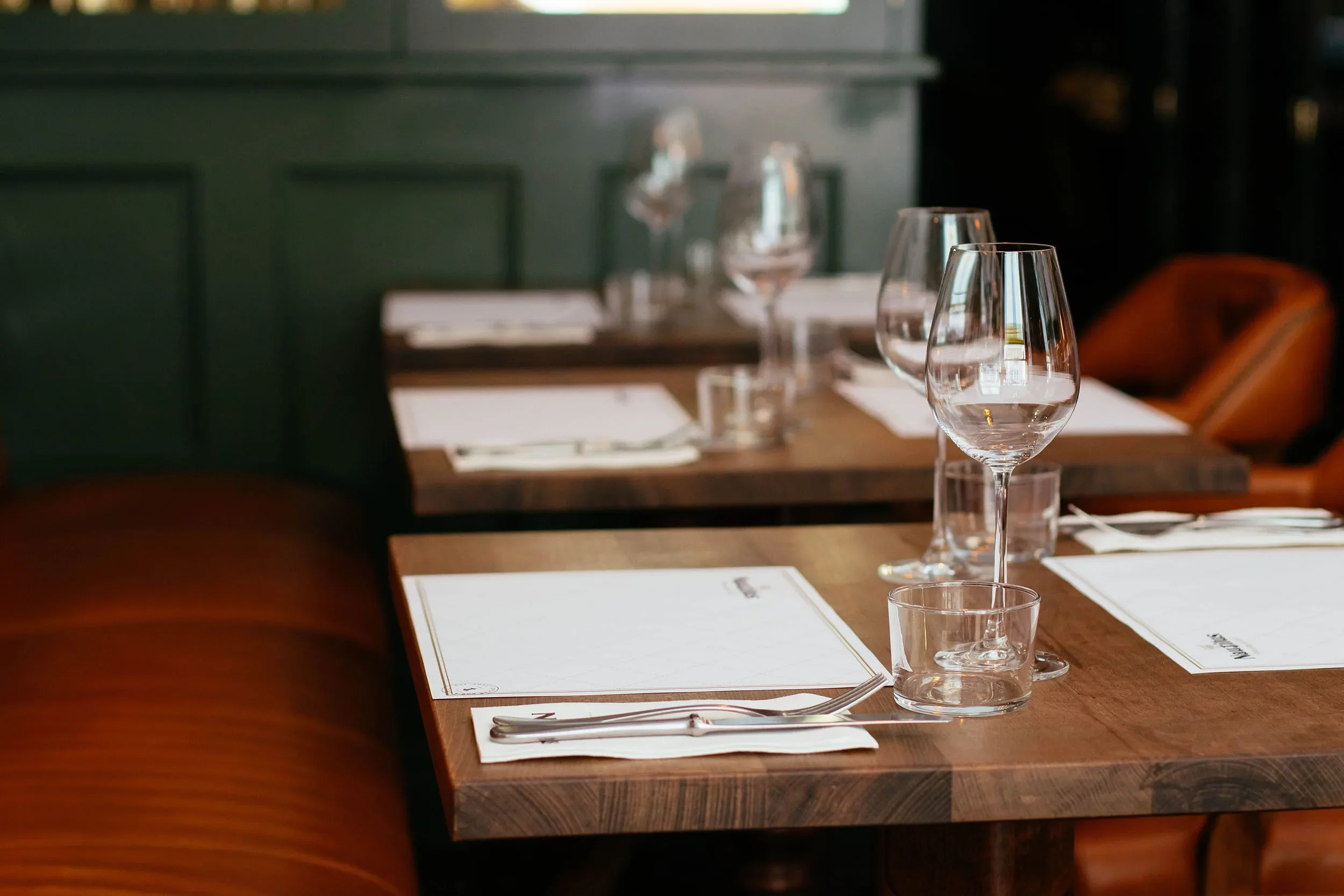
You've heard the word “branding” a hundred times. Perhaps a vendor has pitched it to you or maybe a consultant mentioned it in passing, “You need to work on your branding.” And then maybe you nodded in agreement, because at the time, it seemed like the right thing to do. But then you left the conversation not entirely sure what they meant. That's not your fault. "Branding" is one of those words that gets used so loosely it has almost lost its meaning. Ask five people what restaurant branding is and you'll get various different answers — a logo, a vibe, a color palette, a feeling. Some of those answers are right. None of them are complete.
Here's what restaurant branding actually is, what it isn't, and why getting it right matters more than almost anything else on your to-do list.
WHAT RESTAURANT BRANDING IS NOT
Let's start here, because this is where most of the confusion lives.
Branding is not just your logo. It’s only one piece.
Yes, your logo is one piece of your brand, and probably the most visible piece. But a logo alone is not a brand any more than a front door is a restaurant. It's an entry point, not the whole experience. Whoever tells you that you can get by with just a logo is giving you incorrect advice. It’s much more than that.
Branding is not your aesthetic.
Having a moody Instagram feed or a beautifully photographed menu does not mean your brand is working. Aesthetics without consistency are just pretty pictures.
Branding is not something you do once.
It's not a project you hand off and check off the list. Your brand is every touchpoint your guest encounters — before they walk through the door, while they're there, and after they leave.
SO….WHAT IS RESTAURANT BRANDING?
Restaurant branding is the complete visual and verbal system that tells people who you are, what to expect, and why they should choose you long before they ever taste your food. It includes your logo, yes, but it also includes:
Typography
The fonts you use across every surface — your menu, your website, your signage, your to-go packaging. Are they consistent? Do they feel like the same restaurant, or do they feel assembled from whatever was available at the time? And let’s take it one step further: does the font work with your restaurant’s brand and image? You would never choose a script font (I hope not) for your restaurant’s brand unless it’s used sparingly such as to highlight a special item on your menu.
Color
It’s not just a palette on a mood board, but they’re the actual colors applied consistently across print, digital, and environmental design. The deep green on your menu should be the same deep green on your website header. These are not the same unless someone made sure they were. And that someone made sure the correct deep green for print is compatible for your website header as well.
The menu itself
It’s not about the dishes so much as it’s the design of the document. Hierarchy, type size, spacing, section breaks, these are all important. A well-designed menu guides the eye and influences what people order. A cluttered one creates decision fatigue.
Photography
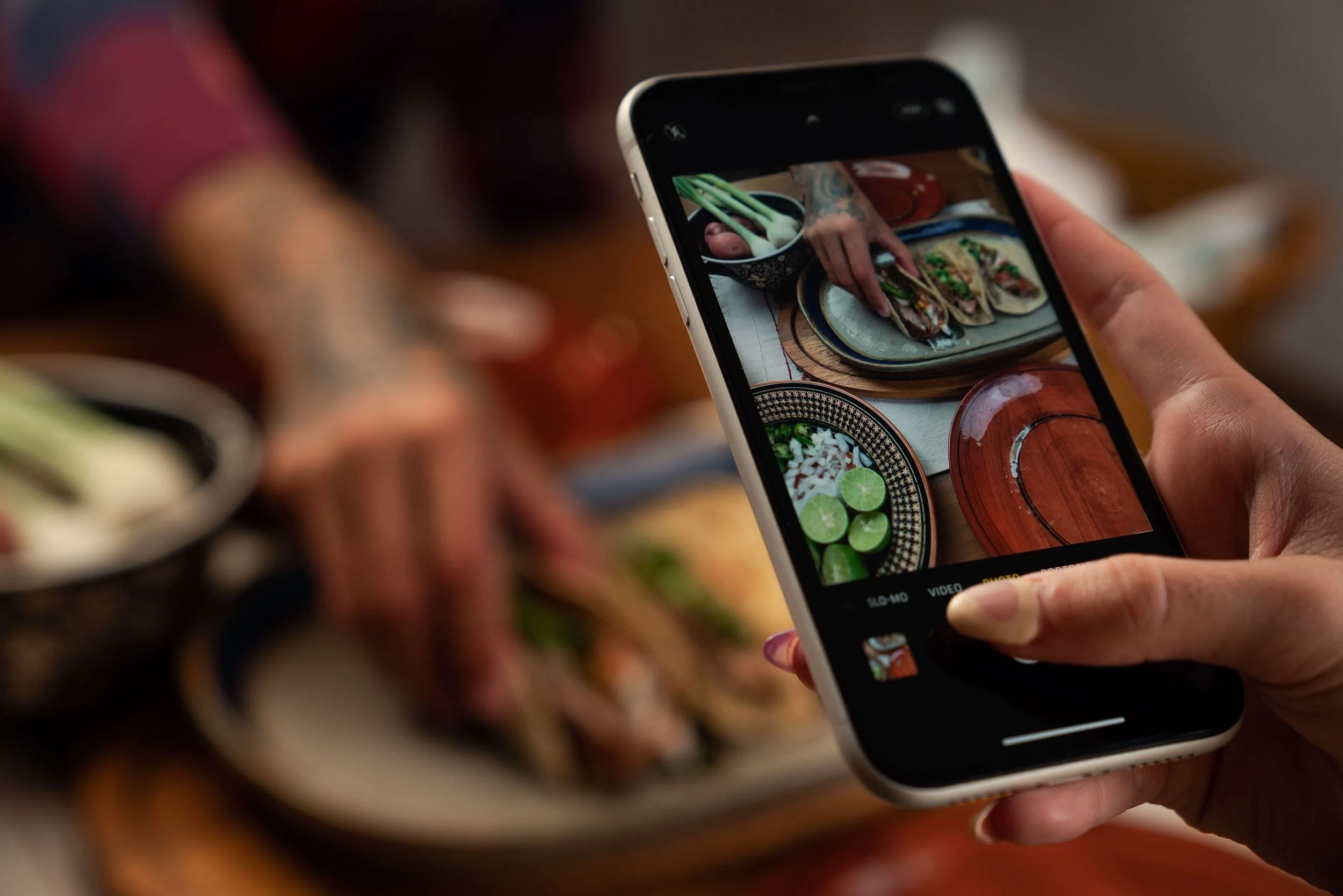
It’s not just that you have good photos, but that they share a consistent point of view. They should have the same light quality, mood, and level of production. A mix of iPhone snapshots and a professional shoot from three years ago don't tell a coherent story.
Your website
It can’t simply exist. It has to look and feel like the same restaurant someone will walk into. If your dining room is warm and candlelit and your website is bright white with a stock sans-serif font, there's a disconnect (because warm and candlelit is more upscale and calls for an upscale font such a serif). Guests feel it before they can name it.
Social media
The visual rhythm of your feed along with the tone of your captions and what you choose to show and not to show is important. This is often where brand consistency breaks down first — because it's updated frequently and rarely by the same person every time.
Packaging and print
To-go bags, coasters, table cards, event flyers, all of these items leave and make an impression. Every physical piece that leaves your restaurant or sits on your tables is part of the brand. Most restaurants treat these as afterthoughts. The best ones treat them as extensions of the same system.
WHY IT MATTERS MORE THAN YOUR MENU
Here's the hard truth: your menu changes. Your hours change. Your chef might change. Your prices will change. Your brand — when it's built properly — is the thing that stays consistent through all of it. It's what makes a guest who visited eighteen months ago feel like they're returning to the same place, even if half the dishes are different.
Put more practical terms, your brand is often the thing that determines whether someone tries you for the first time. Before a new guest ever sits down, they've already formed an impression from your Instagram, your Google listing, your website, or a photo a friend shared. That impression is your brand working (or not working) without you in the room.
Think about the last restaurant you chose when you didn't know the city. You probably searched, looked at a few options, clicked around, and made a decision within a few minutes based almost entirely on how each place presented itself. The food was unknown. The brand was not.
What Inconsistency Actually Costs You
Most restaurant owners don't think of inconsistent branding as something that costs money. But it does — quietly, and in ways that are hard to trace.
When your logo looks different on your menu than it does on your website, it creates a small, unconscious doubt. Is this the same place? When your social feed alternates between polished food photography and blurry phone shots with mismatched filters, it signals that no one is in charge of the story. When your to-go packaging uses a different color than your dining room, the experience fragments.
None of these things individually tanks a restaurant. But together, over time, they create a brand that feels unintentional. And an unintentional brand is a brand that has to compete on price and proximity instead of on reputation and preference.
WHERE TO START
If you're reading this and realizing your restaurant branding is more patchwork than system, here's where to start.
Do an honest audit of your touchpoints
Pull up your website, your most recent menu, your Instagram profile, and any printed materials side by side. Do they look like they belong to the same restaurant? Do they have the same fonts? Same color story? Same general mood? If the answer is no — or mostly no — you have a consistency problem, not a design problem.
Identify what you're actually communicating
Not what you want to communicate — what a stranger who knows nothing about you would take away from your visual presence right now. Ask someone who has never been to your restaurant to describe it based only on your Instagram and website. Their answer tells you what your brand is actually doing.
Fix the most visible problems first
If your website looks nothing like your restaurant, then that's the priority you need to place your focus. If your menu is a PDF that hasn't been redesigned since you opened, that's next. Start with the touchpoints that the most people see before they become guests.
Build toward a system, not a collection
The goal isn't to make everything beautiful — it's to make everything coherent. A modest logo applied consistently across a clean menu, a well-built website, and a focused social presence will outperform a stunning logo that shows up differently everywhere.
THE PATTERN UNDERNEATH ALL OF THIS
The restaurants with strong branding elements aren't always the ones with the biggest budgets. They're the ones where someone made intentional decisions — about fonts, colors, photography, tone — and then applied those decisions consistently across every surface. That consistency is what makes a brand feel established, trustworthy, and worth choosing before anyone has tasted the food.
Restaurant branding isn't decoration. It's the system that carries your reputation when you're not in the room.
If your restaurant’s brand needs more than a self-guided audit, I offer a Brand Clarity Audit for restaurants where I do the heavy lifting. And when you’re ready for a website that matches, here’s my Squarespace web design for restaurants.
Not sure where your brand stands? Start with the free Brand Clarity Field Guide — a self-guided audit you can work through on your own. Download it here.
